Skip to content
Home » Stars, Stakes and Storylines: Previewing Women’s Euro 2025

Stars, Stakes and Storylines: Previewing Women’s Euro 2025

  • by
UEFA Womens Euro 2025 scaled

Stars, Stakes and Storylines: Previewing Women’s Euro 2025

Stars, Stakes and Storylines: Previewing Women’s Euro 2025

By Sportypoll Staff I June 4, 2025

UEFA Womens Euro 2025 scaled
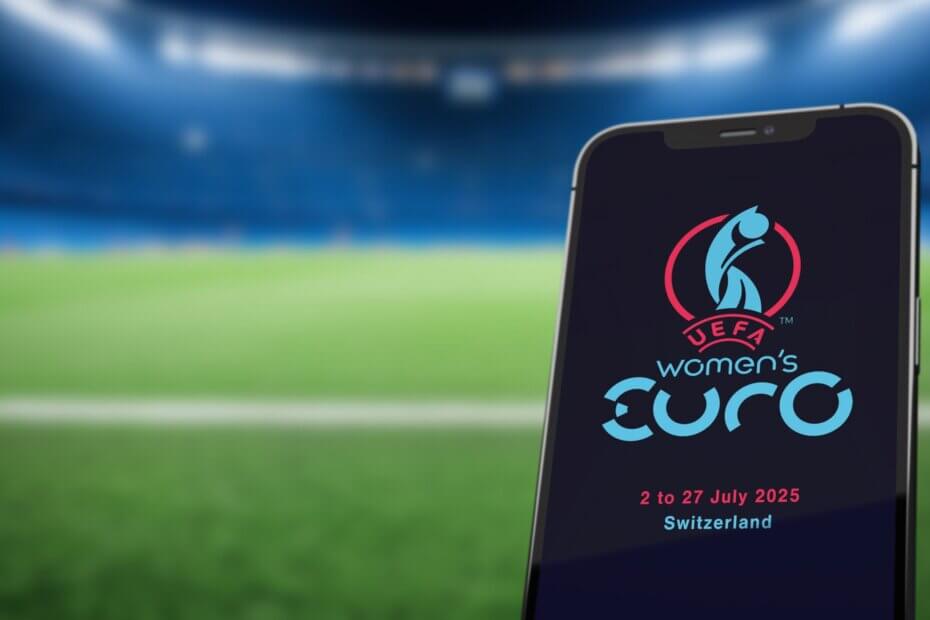
UEFA Women’s Euro 2025 will unite Europe’s top women’s teams in Switzerland this summer. As the tournament draws near, here’s a closer look at the tournament’s key dates, teams, and storylines you would not want to miss.

UEFA Women’s Euro 2025 Host Nation & Venues

The 14th edition of the UEFA Women’s EURO will take place in Switzerland in 2025. The Swiss FA (SFV/ASF) won the hosting rights in April 2023, selected by the UEFA Executive Committee ahead of competing bids from Poland, France, and a joint Nordic group of Denmark, Finland, Norway, and Sweden.
Sixteen teams will compete in eight Swiss cities, with around 700,000 tickets available for the tournament finals.

Here are the venues:

  • St. Jakob-Park, Basel
  • Stadion Wankdorf, Bern
  • Stade de Genève, Geneva
  • Stadion Letzigrund, Zurich
  • Arena St.Gallen, St.Gallen
  • Allmend Stadion Luzern, Lucerne
  • Arena Thun, Thun
  • Stade de Tourbillon, Sion

UEFA Women’s Euro 2025 Dates

Women’s EURO 2025 runs from 2 to 27 July, kicking off on a Wednesday and concluding with the final on Sunday.

How did Women's EURO 2025 Qualifying Work?

The teams were divided into three leagues: League A and League B, each consisting of 16 teams, and League C, which included the remaining nations. League placement was determined by the final standings of the 2023/24 UEFA Women’s Nations League.

Across six matchdays, teams faced off in home-and-away fixtures within their groups — typically made up of four teams, though some in League C had just three.

The top eight finishers in League A earned a direct path to Women’s EURO 2025, while hosts Switzerland, competing in League B, were guaranteed a spot in the finals.

The remaining qualification spots were determined through two rounds of home-and-away European Qualifiers play-offs.

In Round 1, the third and fourth-placed teams from League A faced the League C winners and the three best-ranked runners-up. The eight winners advanced to Round 2.

Meanwhile, the three League B group winners (excluding Switzerland) and the three best-ranked runners-up were drawn into six play-off ties against the remaining runners-up, four third-placed teams, and the best fourth-placed team from League B. The six winners also progressed to Round 2.

In Round 2, the 14 teams were paired into seven two-legged ties, with the winners of each tie securing a place at UEFA Women’s EURO 2025.

UEFA Women’s Euro 2025 Group Analysis

Group A: Switzerland, Norway, Iceland, Finland

Group A might lack the star power of other groups, but it is full of intrigue. Hosts Switzerland could hardly have asked for a more favourable draw, having sidestepped heavyweights like England, the Netherlands, and Sweden. The other teams in the group will also be relieved to have avoided reigning world champions Spain from Pot 1.

Still, this group is far from settled. Norway, widely tipped as dark horses, boast a strong squad featuring Guro Reiten, Frida Maanum, Caroline Graham Hansen, Ada Hegerberg, and Manchester United trio Elisabeth Terland, Celin Bizet, and Lisa Naalsund. Expect a competitive battle for qualification
Group B: Spain, Portugal, Belgium, Italy

Spain, fresh off their World Cup glory, are out to continue their dominance — and their draw couldn’t have gone much better. They are firm favourites to progress, but they will not have it all their own way.

Italy is improving fast, as shown by their recent win over Germany, while Portugal is riding a wave of momentum with a 12-match unbeaten streak. Belgium, who reached the quarter-finals in 2022, earned their spot with impressive play-off wins against Greece and Ukraine.

Still, this group is Spain’s to lose, especially with Ballon d’Or winner Aitana Bonmatí pulling the strings in midfield.

Group C: Germany, Poland, Denmark, Sweden

Group C is stacked with quality, featuring three teams ranked inside the world’s top 12. Denmark, spearheaded by Bayern Munich’s Pernille Harder, are aiming to recapture the magic of 2017 — when they knocked out Germany en route to the final. Sweden, always a force at major tournaments, bring experience and quality but may be on the decline with an ageing core.

Germany, meanwhile, will be desperate to redeem themselves after a shock group-stage exit at the last World Cup. The opening clash between Denmark and Sweden could prove crucial to how this group unfolds.

Group D: France, England, Wales, Netherlands

This year’s “group of death” lives up to the name, featuring three serious contenders for the title — and newcomers Wales, who come in with zero pressure and everything to gain.

England, the reigning champions, face a tough start with back-to-back clashes against France and the Netherlands in Zurich. Their recent Nations League results — one win and one loss against both sides — suggest this group could go in any direction.
France, for all their talent, remain one of the sport’s great underachievers, still chasing their first major trophy despite a star-studded squad.

UEFA Women’s Euro 2025 Title Contenders

Spain

Spain’s World Cup win in 2023 came despite serious turmoil off the pitch — and for a while, they looked unstoppable. But things quickly took a darker turn after the final, when former RFEF president Luis Rubiales was convicted following the incident involving Jenni Hermoso. Team captains Irene Paredes and Alexia Putellas took a stand, pushing for change and testifying in court to support their teammate.
That unrest, coupled with a now vulnerable looking defence, has since stripped Spain of their air of invincibility. A missed late penalty from Putellas ultimately cost them a bronze medal at the Olympics — an unexpected outcome for a team heavily favoured to win gold.
Spain have not had it easy since the Olympics. Injuries have chipped away at their core, with stars like Putellas, Bonmatí, and Guijarro all spending time on the sidelines. The latest blow came when Real Madrid’s Teresa Abelleira tore her ACL—ruling her out of the EUROs and leaving a major gap in midfield.
Despite the injury setbacks and ongoing off-field distractions — including an appeal in the Rubiales case — Spain’s recent results have fallen well below expectations. A defeat to Czechia and draws with Italy and Canada in friendlies simply are not good enough for a squad of this calibre.
Spain’s 1-0 defeat to England at Wembley in the Nations League back in February might have been an early glimpse of the EURO 2025 final. Without the influential duo of Alexia Putellas and Patri Guijarro, Spain struggled in midfield — a battle they decisively lost.

They are no longer bulletproof. But they are still breathtaking. 

What truly sets Spain apart is their resilience. In the face of some of the darkest moments the women’s game has seen, they have remained united and defiant. With Putellas back to her Ballon d’Or-winning best, few would bet against her leading Spain to EURO glory this summer.

England

It’s been a turbulent ride for the Lionesses since their fairytale EURO 2022 triumph on home soil. Two of the tournament’s standout stars — captain Leah Williamson and Golden Boot winner Beth Mead — missed the 2023 World Cup, where England’s spirited run ended in heartbreak against Spain in the final.
Then came the Olympic blow: a crushing 6-0 win in their last qualifier wasn’t enough to book a spot in Paris. Qualification for EURO 2025 followed, but just barely — two draws and a loss in a brutal group with France, Sweden, and Ireland meant England advanced by the narrowest of margins.
A chaotic 4–3 friendly defeat to Germany last year raised serious questions about England’s defensive stability, but Sarina Wiegman’s side appears to be back on course.
Injuries may have disrupted her plans, but they’ve also allowed the next generation — Jess Park, Grace Clinton, and Aggie Beever-Jones — to gain valuable experience and push for permanent spots. With EURO 2022 reminding everyone just how game-changing substitutes like Ella Toone and Alessia Russo can be, squad depth looks more important than ever.
A hard-fought 1–0 victory over World Cup champions Spain in a sold-out Wembley Nations League fixture helped ease concerns about England’s ability to defend their EURO crown — especially impressive given the absences of key starters Beth Mead, Lauren Hemp, and Alex Greenwood.

UEFA Women’s Euro 2025 Breakout Stars

Barcelona’s Sydney Schertenleib has wasted no time in creating a stunning highlights reel at the women’s biggest football club and presents as a combination of sorts of two of her teammates at Barca, Salma Paralluelo and Caroline Graham Hansen.

An FC Zürich academy graduate, she made her senior international debut for Switzerland in February 2024 — just a month after turning 17 — and has already announced herself with a stunning goal for the EURO 2025 hosts.

Grace Clinton and Jess Park have stepped up for England in recent months, earning praise for their performances under Sarina Wiegman. Across the Channel, Netherlands and Chelsea rising star Wieke Kaptein is also turning heads this season. Starting both Netherlands’ friendlies against China and the USA, the 19-year-old is showing maturity beyond her years — and with Sonia Bompastor now guiding her development at Chelsea, EURO 2025 might just be her coming-of-age moment.

UEFA Women’s Euro 2025 Golden Boot Contenders

Vivianne Miedema (Netherlands)

Vivianne Miedema, the WSL’s all-time leading scorer, has a jaw-dropping 96 goals in 122 caps for the Netherlands — where she plays as a traditional No. 9, a role she rarely fills at club level.

The Dutch icon, affectionately dubbed the ‘GOAT’, has joked about how long it has taken to reach 100 after a knee injury robbed her of a year in orange. But with the 29-year-old now back among the goals at Manchester City, EURO 2025 could be the stage where she finally hits triple digits — and in some style.

Alexia Putellas (Spain)

When a midfielder regularly finds herself in the Golden Boot conversation, you know you are dealing with something special. Alexia Putellas — perhaps the best we have seen since Marta — has dazzled again this season, even with a few injury setbacks at Barcelona.

Now back to her magical best, and with Spain handed a relatively kind group draw, she could light up EURO 2025 once more.

Alessia Russo (England)

Alessia Russo’s audacious backheel against Sweden in the EURO 2022 semi-final is already being hailed as one of the most memorable knockout stage goals in tournament history. That it came from a 23-year-old in the biggest match of her career only adds to its legacy.
Russo’s tireless work-rate often sees her drop deep to support the build-up and defend, occasionally to the detriment of her presence in the box. However, Sarina Wiegman’s recent emphasis on using her as a more traditional No. 9 could significantly boost her goal tally.

Be a part of your team's Sportypoll fan community

  • Arsenal
  • Chelsea
  • Liverpool
  • Manchester City
  • Manchester United
  • Tottenham

Join Our Football Community Follow Us

Join Our Football Community , Follow Us

Leave a Reply

Your email address will not be published. Required fields are marked *