5. Tom Whittaker (1947-1956)
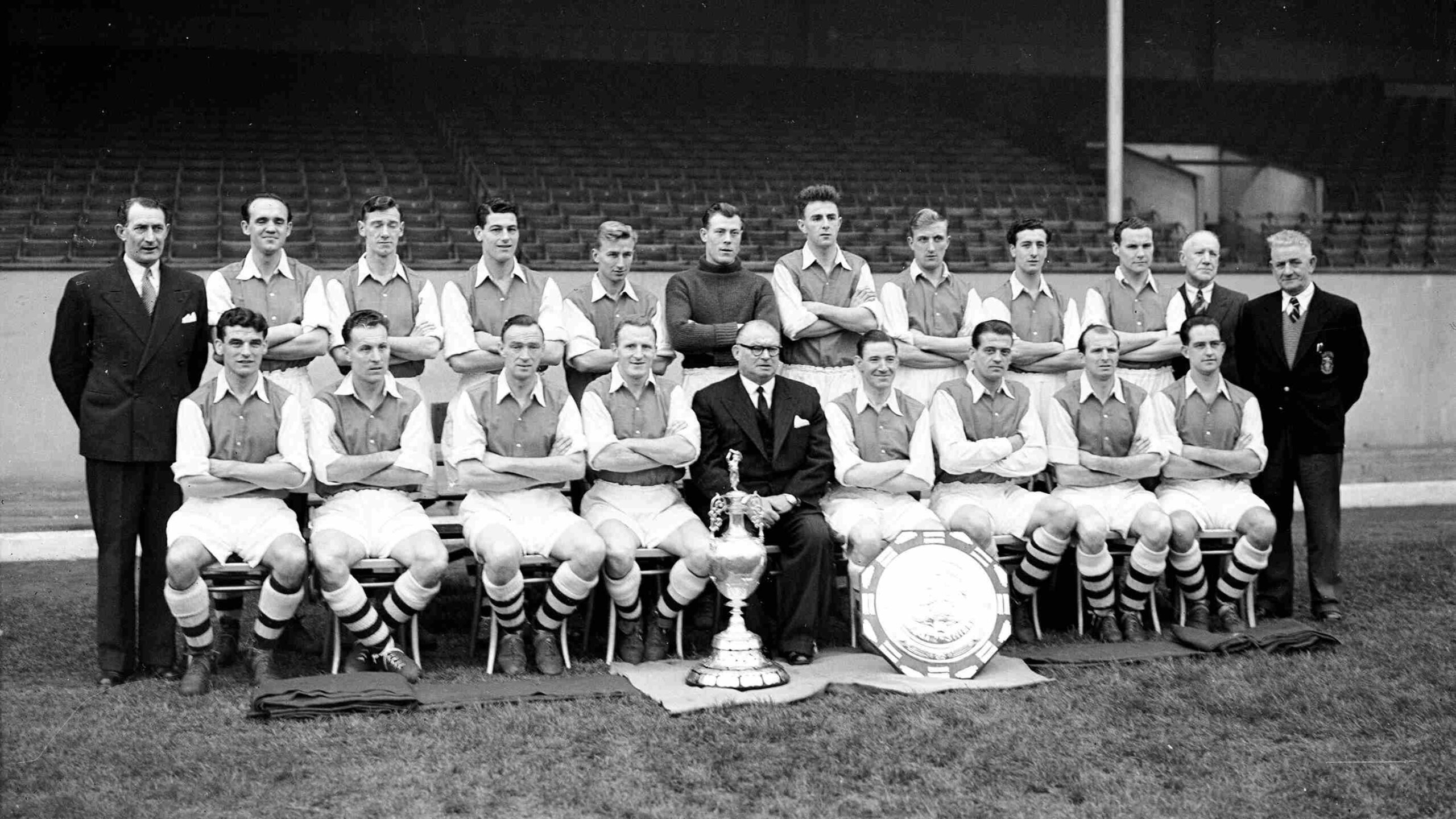
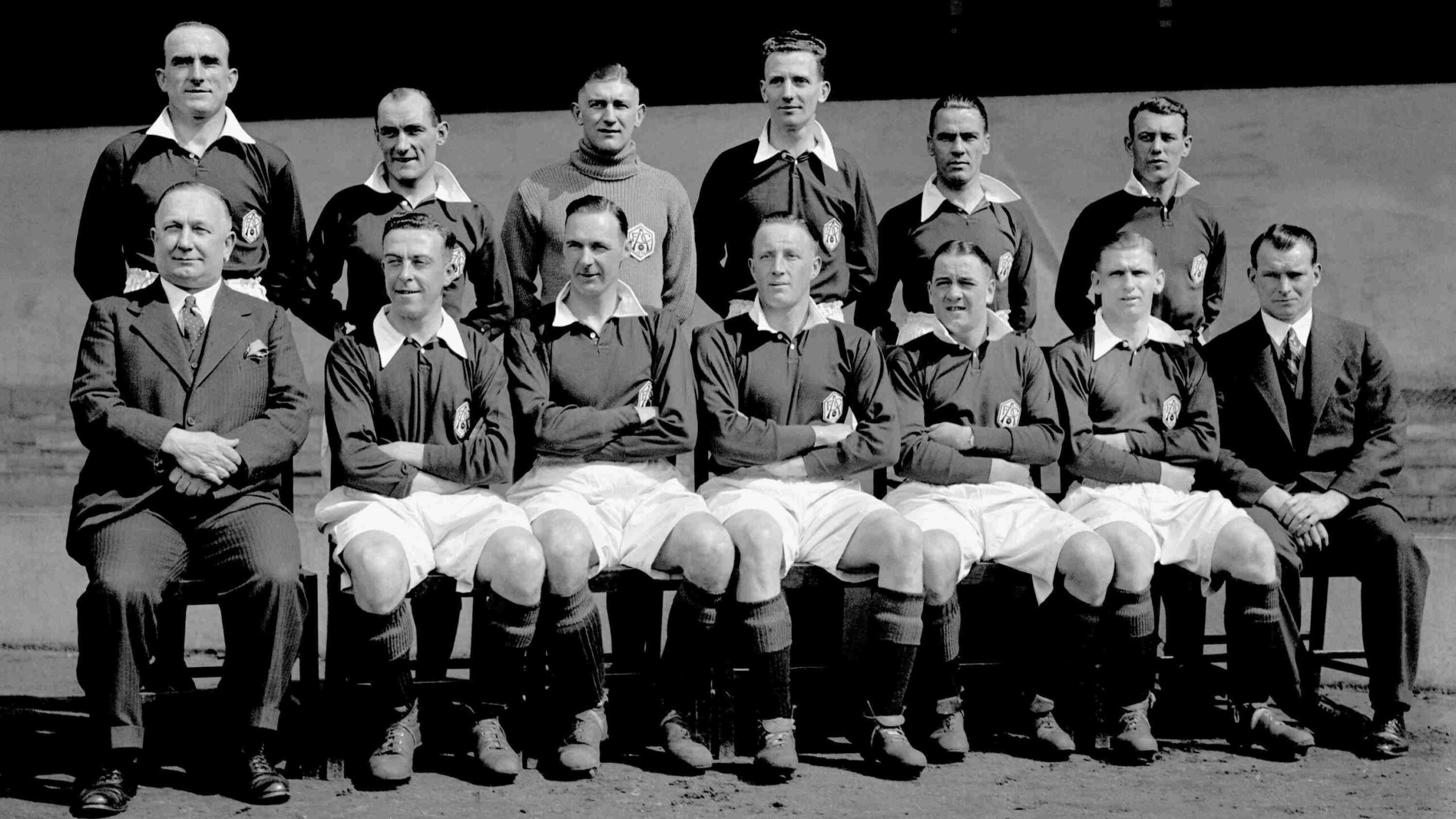
The 1953-54 Arsenal squad with the League Championship and Charity Shield trophies: (back row, l-r)
Jack Crayston, Arthur Shaw, Don Oakes, Cliff Holton, Arthur Milton, Jack Kelsey, Bill Dodgin, Peter
Goring, Len Wills, Reuben Marden, J Shaw, W Milne (front row, l-r) Joe Wade, Don Roper, Lionel Smith,
Alex Forbes, manager Tom Whittaker, Jimmy Logie, Doug Lishman, Wally Barnes, Dave Bowen.
Tom Whittaker first served Arsenal as a player. However, his playing career came to an
abrupt halt due to a knee injury, prompting him to join the Arsenal coaching staff
during Herbert Chapman’s tenure. Following Chapman’s passing, the Hampshire
native retained his role as a trainer under George Allison. Whittaker also contributed
his expertise as a trainer for the England national team.
Whittaker’s role as a trainer was deemed crucial for Arsenal’s success during the
Chapman era. He was lauded for revolutionising and modernising the club’s training
and physiotherapy methods. Whittaker continued to excel at this role under Alisson.
However, upon Alisson’s retirement, he was called upon to assume a more significant
role within the team.
Whittaker stepped into Alisson’s shoes in 1947 and enjoyed success straight away. He
led the club to the domestic title in his debut season in 1947/48. Two seasons later, he
would lift the FA Cup at Wembley as the Arsenal manager — an accomplishment that
had eluded him during his playing days for the Red and White. Whittaker would win
the league once again in 1952/53, matching Alisson’s managerial haul of two domestic
league titles.
George Allison and Tom Whittaker enjoyed comparable successes as managers at
Arsenal, though Whittaker boasted a marginally superior win record. Alisson oversaw
279 matches with a 46% win rate, while Whittaker maintained a 47% win
record in 429 games. Furthermore, we contend that Whittaker became the manager at
a more challenging time. Unlike Alisson, Whittaker did not benefit from inheriting
Chapman’s historic team.
4. Bertie Mee (1966-1976)
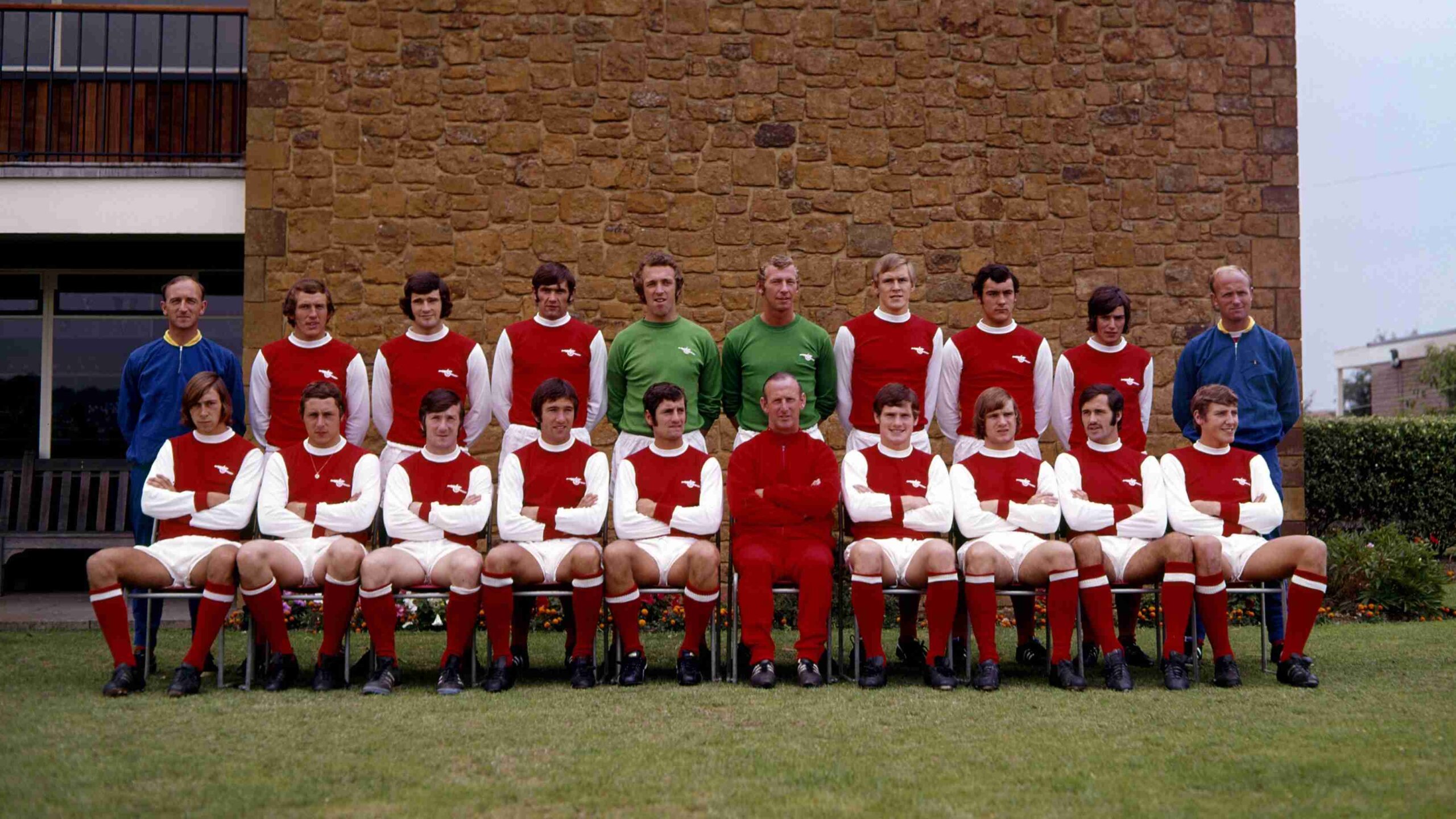
Arsenal team group, 1970-71. (Back row, L-R) Wright (trainer), Bob McNab, Peter Storey, Peter Simpson,
Geoff Barnett, Bob Wilson, John Roberts, Ray Kennedy, Peter Marinello and Don Howe (coach). (Front
row, L-R) Charlie George, John Radford, George Armstrong, Jonathon Sammels, Frank McLintock,
manager Bertie Mee, Pat Rice, Eddie Kelly, George Graham, and Sammy Nelson.
Like Whittaker, Bertie Mee was a part of the Arsenal coaching staff before taking on
the managerial job. It did raise quite a few eyebrows, however, when Arsenal
appointed Mee as the manager after sacking Billy Wright. This turn of events might
have taken aback Mee himself, as he stipulated a return to the physiotherapist role in
his contract after 12 months.
The former Royal Army Medical Corps sergeant boasted an impressive football
background, albeit solely in physiotherapy at that time. Was he the right man to lead a
club that had been trophyless since 1953?
Mee swiftly silenced his critics by guiding the club to two consecutive League Cup
finals in 1968 and 1969. Although the Gunners had to settle for runner-up medals on
both occasions, the club’s supporters were delighted to witness their team back in
contention for trophies once again. Arsenal’s prolonged drought for silverware would
finally conclude under Mee’s leadership just a year later, marking a particularly
memorable achievement.
Arsenal won their maiden European trophy in 1970 as they overcame a 3-1 first-leg
deficit against Anderlecht in the Fairs Cup final to win the tie 4-3 on aggregate. It
marked a proud occasion for Mee, but his crowning glory was still a year away when
the Gunners claimed another first in their history: the domestic double. Mee could not
add further silverware to the cabinet beyond that season, yet his legacy endures for
reigniting the winning ethos at Highbury.
3. George Graham (1986-1995)
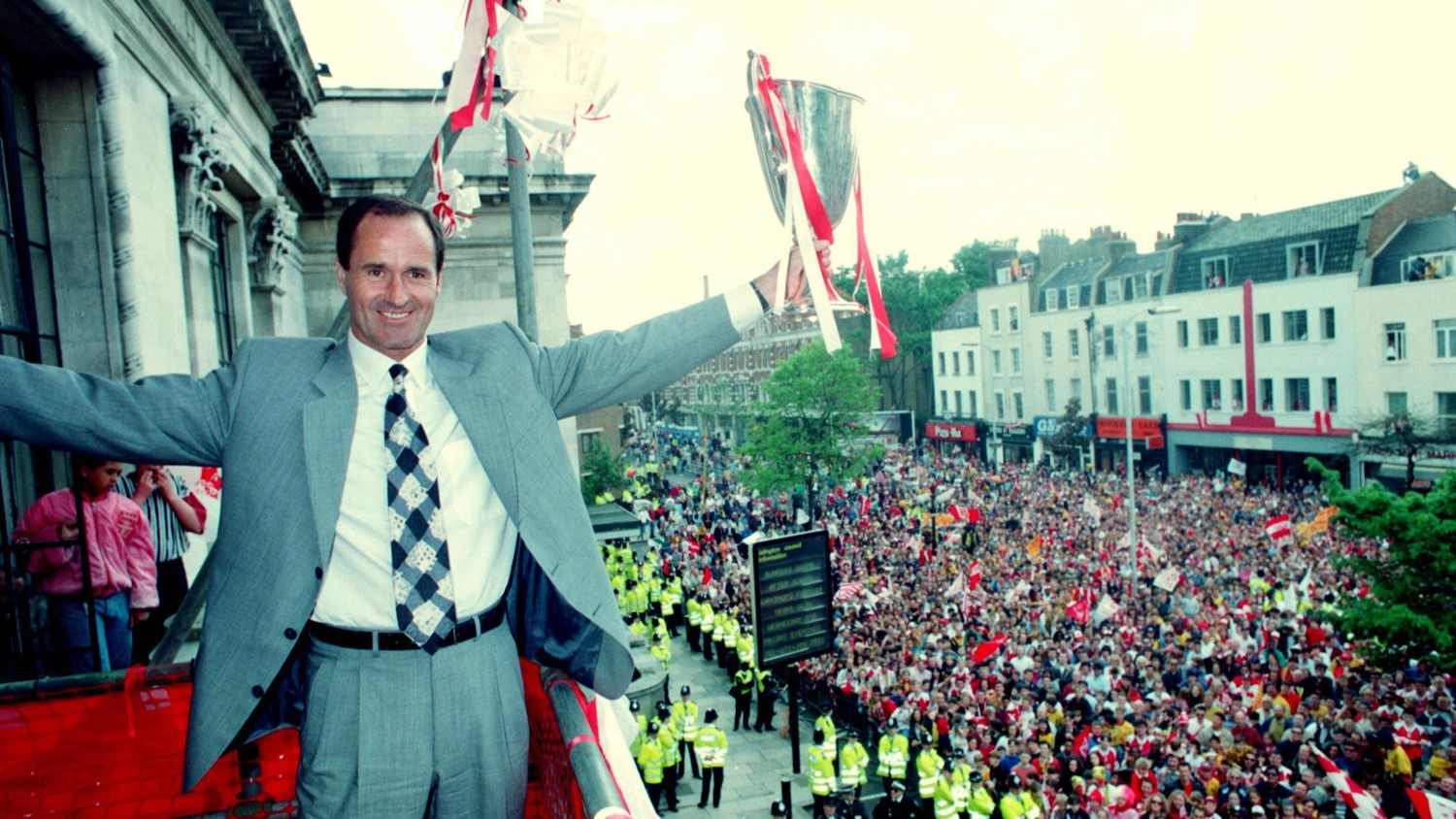
Arsenal manager George Graham celebrates, after the team paraded the European Cup Winner’s Cup
through North London.
George Graham is another name on our top 5 Arsenal managers list who has
represented the club both on the pitch and in the dugout. He was a key part of Bertie
Mee’s iconic 1970/71 double-winning team and went on to have an incredibly
successful career as Arsenal’s boss, guiding the Gunners to six trophies during his nine�year tenure. The Scotsman suffered an unceremonious end to his Arsenal managerial
career after a Premier League inquiry found him guilty of illegally receiving a hefty
£425,000 payment from an agent, but that could not undermine his legacy as an
Arsenal legend.
After leaving Arsenal as a player in 1972, Graham returned to Highbury as the new
manager. The Arsenal hierarchy was impressed by Graham’s work, and their
confidence in him was swiftly justified when Arsenal secured their first trophy since
1979, triumphing in the League Cup in 1987. Graham led the team to clinch the league
title and repeated the feat in the 1990-91 season. He was also at the helm when
Arsenal claimed the UEFA Cup Winners’ Cup, which was their second European trophy,
in 1994. The Gunners have not won any European silverware since.
George Graham also deserves credit for bringing in players like Ian Wright and David
Seaman to the squad. He forged one of the most formidable defensive setups that
English football has ever seen. Since 1888-89, there have been just four occurrences of
a team seeing out their league campaign by conceding fewer than 20 goals.
Remarkably, Arsenal achieved this feat twice! Firstly, under Graham during the 90/91
season, and secondly, under Arsene Wenger, with the foundation of Graham’s
defensive structure still intact.
2. Herbert Chapman (1925-1934)
Arsenal squad 1932-33: Back row (l-r): Tom Parker, Charlie Jones, Frank Moss, Herbie Roberts, Bob
John, Tommy Black; Front row (l-r): manager Herbert Chapman, Joe Hulme, David Jack, Jack Lambert,
Alex James, Cliff Bastin, assistant manager Tom Whittaker.
It’s impossible to talk about the best Arsenal managers of all time without bringing up
Herbert Chapman, the harbinger of the club’s first golden age. Chapman was already
an accomplished manager when he took charge of Arsenal in 1925, having won two
First Division titles and an FA Cup with Huddersfield Town. Chapman orchestrated
Arsenal’s transformation from relegation contenders to a dominant force in the First
Division by successfully implementing the WM formation.
Chapman devised a five-year blueprint for success that bore fruit at precisely the right
moment! In the Chapman era, Arsenal secured their initial major trophy in 1930,
coinciding precisely with his five-year tenure at the club. Upon assuming control and
cementing his tactical strategy, he began assembling a squad tailored to his vision of
relentless, counter-attacking football. After a few near misses, Arsenal clinched two
league titles and a FA Cup under Chapman-haul that might have been greater had he
not tragically passed away unexpectedly at the age of 55.
1. Arsene Wenger (1996-2018)
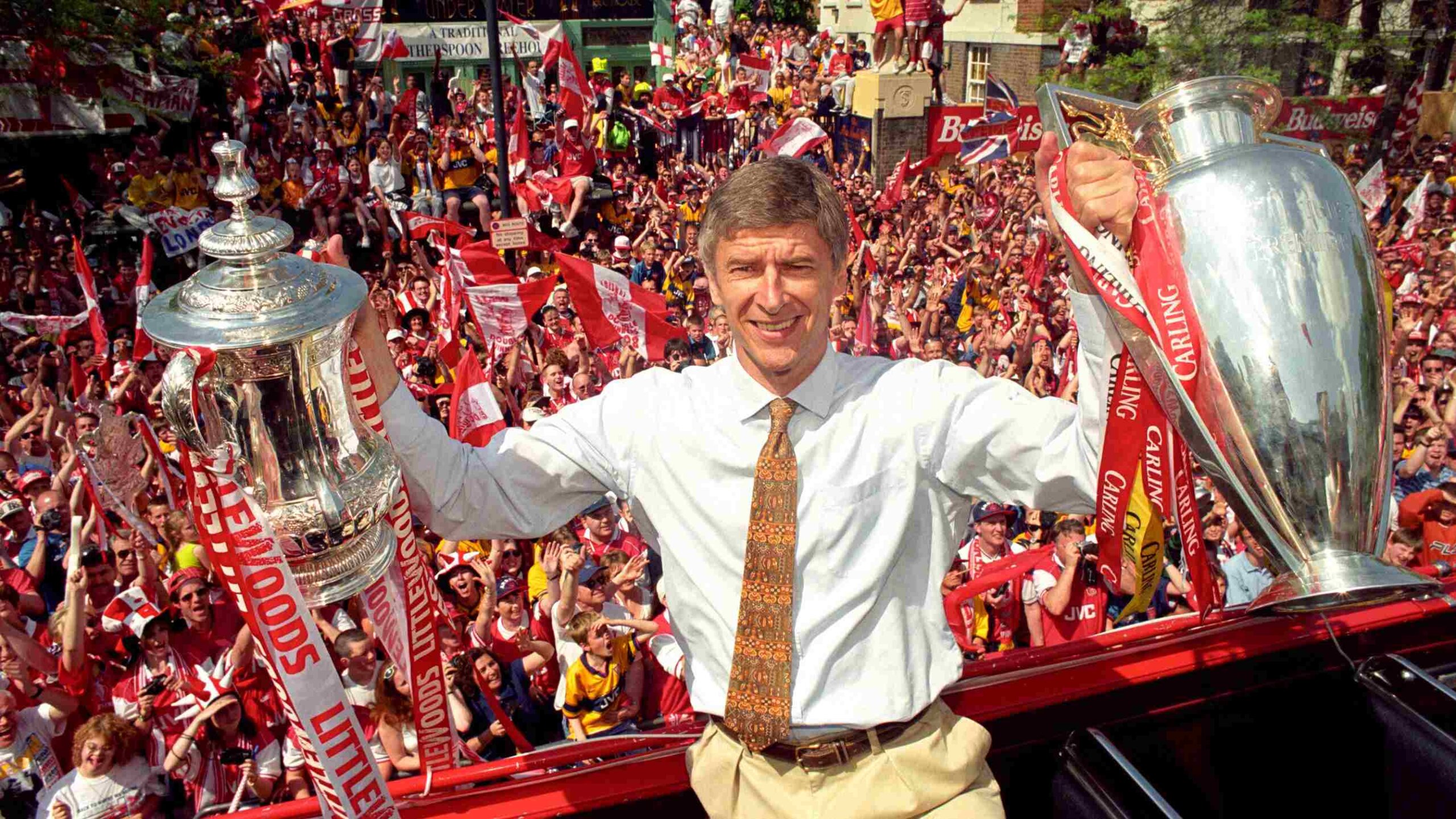
Arsene Wenger poses with the FA and League Cups as the team take a victory tour from the Highbury
ground to Islington Town Hall to celebrate Arsenal’s cup double.
Arsenal and Arsene Wenger still sound synonymous even though it has been many
years since the Frenchman left the club. The 22-year relationship between him and the
club ended on a somewhat bitter note, with fans displaying ‘Wenger Out’ banners due
to the team’s disappointing performances. Arsenal bid him farewell with a grand
ceremony at the Emirates, but it fell short of being a perfect goodbye in many respects.
Arsene Wenger’s appointment at Arsenal came as a surprise following Bruce Rioch’s
dismissal. While he had previously won Division 1 with Monaco, his two-year absence
from European football to manage in the Japanese top-flight raised doubts among the
Arsenal faithful regarding his credentials.
Wenger proved his mettle by disregarding the hostile British media to become the first
foreign manager to secure a double in English football, all achieved within only his
second season. Wenger deployed a fascinating yet efficient style of football that
captivated football lovers worldwide.
Arsenal won three Premier League titles in the first seven years of the Wenger era, including the historic 2003/04 season, in which the Gunners went unbeaten. To this
day, Arsenal remains the only Premier League team to have achieved this feat. Wenger
was agonisingly close to delivering Arsenal their first Champions League title in 2006,
but a 2-1 loss to Barcelona in the final prolonged their wait for the most cherished prize
in European football.
After moving to the new stadium, Arsenal had to let go of many of their star players.
Wenger remained loyal to the club regardless and made sure the club secured regular
Champions League football to keep the club financially healthy. He signed off in 2018
with three Premier League titles and seven FA Cups to his name.